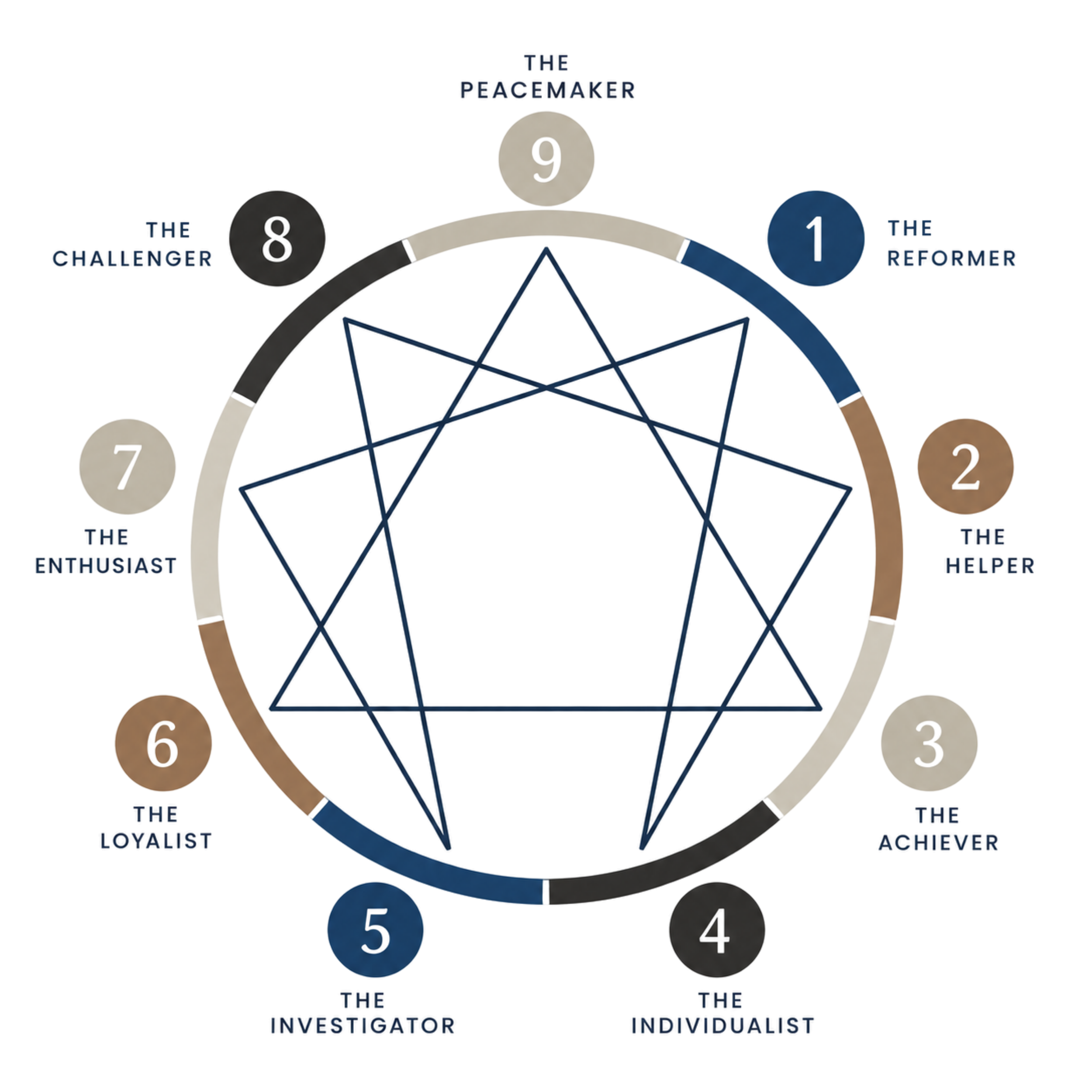
Nine different lenses
The Enneagram describes nine interconnected personality types, each with its own distinctive way of seeing and experiencing the world.
One way of understanding the nine types is to think of them as nine different lenses. Each lens brings its own particular focus:
What we notice, what we value, how we respond to people and situations, and what we may overlook.
The Enneagram helps us recognise the lens through which we habitually operate, while also opening up the possibility of seeing the world through the other eight.
Type 1 – The Reformer
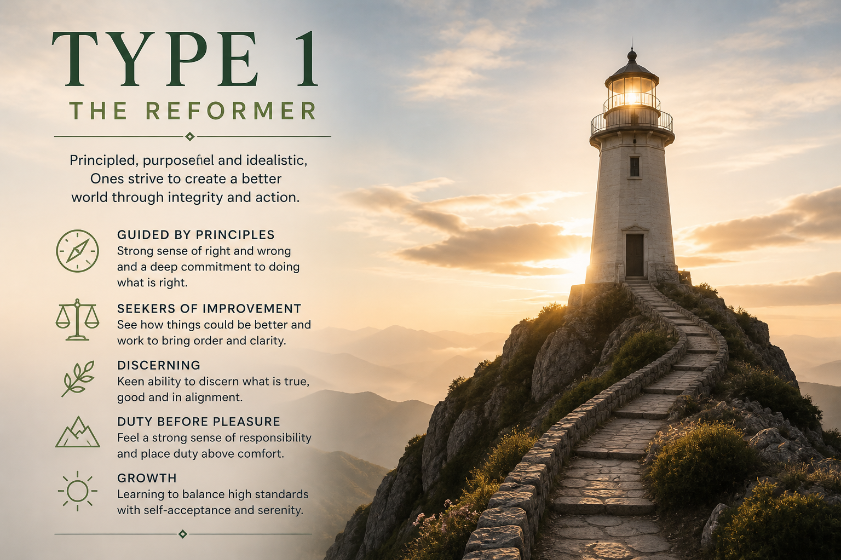
Type Ones come to teach us about goodness, integrity and the possibility of making the world a better place. They are idealists who naturally see how things could be improved and often have the knowledge, principles and determination to make that happen.
Guided by a strong inner sense of right and wrong, Ones value honesty, responsibility, fairness and living in accordance with their principles. They have a remarkable ability to discern what is helpful, appropriate, or out of alignment, and can bring order and clarity to situations that feel chaotic. Duty and doing what is right can naturally take precedence over pleasure or personal comfort.
At times, their high standards can turn into self-criticism or a tendency to correct others, but their deeper gift is discernment rather than judgement. At their best, Ones develop a sense of serenity, accepting what is while still having the wisdom to recognise what can, and should be changed.

Type 2 – The Helper
Type Twos come to teach us about love, connection, and the joy of caring for others. They are naturally attuned to people and often sense what others are feeling or needing before it is expressed. Warm, friendly, and generous, Twos are natural nurturers who are drawn to helping, supporting, and encouraging those around them.
Relationships are central to their world, and they have a wonderful ability to make people feel seen, valued, and cared for. Their deep sensitivity means that disconnection or unkindness can be felt very personally. Yet their greatest gift comes when they can keep their hearts open while also recognising their own needs and maintaining healthy boundaries.
Twos can sometimes give in the hope of being appreciated, needed, or loved in return, while finding it difficult to ask for what they need themselves. At their best, they give freely and generously, not to gain approval, but simply for the joy of love and connection.

Type 3 – The Achiever
Type Threes come to teach us about value, confidence, and the joy of bringing our potential into the world. They are dynamic, capable, and naturally focused on making things happen.
Threes are often highly competent, productive, and adaptable, with an ability to read a situation quickly and understand what is needed to succeed. They can effortlessly adjust to different environments and inspire confidence in others through their energy and determination.
However, their focus on achievement can sometimes lead them to become disconnected from their own feelings and needs, believing that they are valued more for what they accomplish than simply for who they are. They may find it difficult to stop, slow down or reveal their more vulnerable side. Relationships can suffer when doing takes precedence over being.
At their best, Threes discover that their true value does not depend on an image they create or what they achieve, but on the preciousness of who they already are.

Type 4 – The Individualist
Type Fours come to teach us about depth, identity, authenticity, and the beauty of being uniquely ourselves. They have a natural sensitivity to the emotional world and an ability to see what is special, beautiful, and meaningful in people and in life.
Creative, intuitive, and deeply empathetic, Fours are often comfortable with emotions that others may find difficult and can sit alongside people in pain without needing to fix it. They value authenticity and are drawn to expressing themselves in original and personal ways.
At times, however, their attention can become focused on what is missing—what others have that they do not, or what they imagine is absent from their own lives. This can lead to comparison, emotional ups and downs and a longing to feel truly understood.
At their best, Fours discover that they do not need to be different or complete themselves through something outside of them. Their gift is the ability to bring depth, beauty, and emotional truth to the world simply by being fully themselves.

Type 5 – The Investigator
Type Fives come to teach us about knowledge, understanding and the power of looking deeply beneath the surface. They are naturally curious, observant, and precise, often developing a remarkable depth of knowledge in subjects that fascinate them. Fives tend to rely on their minds to make sense of the world and can step back from emotion to see situations with clarity and objectivity. They value privacy and solitude, using time alone to process experiences and recharge their energy.
At times, however, they can become so protective of their inner resources that connection with others feels demanding or overwhelming. They may find it difficult to identify or express their feelings, appearing detached when in fact they are often extremely sensitive. There is a natural tension between their desire for independence and their longing for meaningful connection.
At their best, Fives combine their depth of knowledge with generosity, sharing their insights and helping others make sense of a complex world, while remaining open to spontaneity, emotion, and the richness of human connection.

Type 6 – The Loyalist
Type Sixes come to teach us about courage, loyalty, and the value of being alert to what might lie ahead. They naturally scan the horizon, considering what could go wrong and preparing for the unexpected. While this can sometimes become anxiety, doubt, or overthinking, it also gives Sixes a remarkable ability to anticipate risks, solve problems and see what others may have overlooked.
Responsible, responsive, and tenacious, they are often the people you can rely on when things become difficult, and their loyalty runs deep once trust has been established. Sixes may find trust challenging, needing evidence and reassurance before they feel secure, and can sometimes see danger where none exists. They may also delay decisions while searching for certainty.
At their best, Sixes learn to use fear as information rather than allowing it to control them. Their courage comes not from having no fear, but from taking action despite uncertainty, trusting themselves and discovering that they are more capable than they imagined.

Type 7 – The Enthusiast
Type Sevens come to teach us about joy, possibility, freedom, and the richness of life. They have naturally active minds, a vivid imagination, and an ability to see possibilities that others may not have considered.
Enthusiastic, optimistic, and often great fun to be around, Sevens are energised by new experiences, ideas, and opportunities. They dislike feeling trapped or limited and can find it difficult to settle on just one option when there are so many exciting possibilities available. Their positive outlook can sometimes become a way of moving away from pain, fear, or boredom, keeping their attention focused on what might happen next rather than what is happening now. They may avoid difficult conversations or move quickly from one interest to another without bringing things to completion.
At their best, Sevens learn that freedom does not mean avoiding discomfort or keeping every option open. By staying present and allowing themselves to experience the full range of life, they can bring their extraordinary creativity, enthusiasm, and sense of possibility into the world with greater depth and purpose.

Type 8 – The Challenger
Type Eights bring strength, energy, and a powerful sense of aliveness to the world. They have a natural understanding of power and how it can be used either to empower or to control, and they often have an instinctive ability to make an impact.
Confident, direct and frank, Eights are not afraid to speak their mind, take a stand or confront difficult issues. They have a strong sense of justice and are often fiercely protective of those who may not be able to speak for themselves.
With their larger-than-life presence and expansive energy, they can put things into motion and inspire others to act. Their gift is their ability to tell the truth as they see it, bringing clarity to situations and helping others recognise where real power lies. Beneath their formidable exterior is often a big heart and a genuine desire to make a difference.

Type 9 – The Peacemaker
Type Nines bring gentleness, kindness, and a natural acceptance of others. They are peaceful, patient, and attentive, with an ability to be fully present and to see different points of view, even when those views conflict with their own.
Their natural gift is diplomacy: they can say difficult things without judgement and help people find common ground. Nines often have a quiet presence and are good listeners, readily putting the needs of others before their own.
However, this can sometimes mean losing touch with what they themselves want or need, making it difficult to say no or to step forward and take action for themselves. They may avoid conflict or retreat into daydreaming and rumination when life becomes uncomfortable.
At their best, Nines embody a sense of unity and wholeness, bringing people together through their calm presence, acceptance, and ability to appreciate the world from many different perspectives.